A co-borrower personal loan is a joint loan taken by two (or more) applicants who share equal responsibility for repayment and equal access to the loan proceeds. Unlike a cosigner—who backs the loan but typically doesn’t receive or use the funds—a co-borrower is an active party: both credit profiles and incomes are evaluated, both sign the note, and both are fully liable for the debt. This structure can improve approval odds, raise the maximum loan amount, and sometimes secure better terms, but it also introduces shared legal and credit risks.

What “Co-borrower” Means in Personal Loans
- Equal responsibility and rights: Each borrower is 100% responsible for making payments and for the entire balance, not just “their half.” Lenders can pursue either party for missed payments, and delinquencies affect both credit reports.
- Joint access to funds: Both borrowers generally have equal access to the disbursed funds and equal ownership of any item or service purchased with those funds.
- Combined qualification: Lenders typically assess both applicants’ credit scores, credit histories, employment, income, and debt-to-income (DTI) ratios. Some lenders use the lower credit score or a blended/paired assessment to set terms. If one profile is significantly weaker, it can limit rate improvements.
- Common use cases: Couples managing shared expenses, partners consolidating debt together, family members financing a project, or business partners funding startup costs. A co-borrower is most appropriate when both parties benefit from the funds and intend to share repayment.
Co-borrower vs. Cosigner (Quick Distinction)
- Co-borrower: Shares access to funds and ownership of outcomes; equally liable for payments; typically a spouse/partner, family member, or business partner who will use the funds or benefit directly.
- Cosigner: Does not use the funds; steps in only if the primary borrower defaults; helps the primary borrower qualify but doesn’t share ownership or routine payment duties. A cosigner’s credit is still at risk if payments are late or missed.

Advantages of a Co-borrower Personal Loan
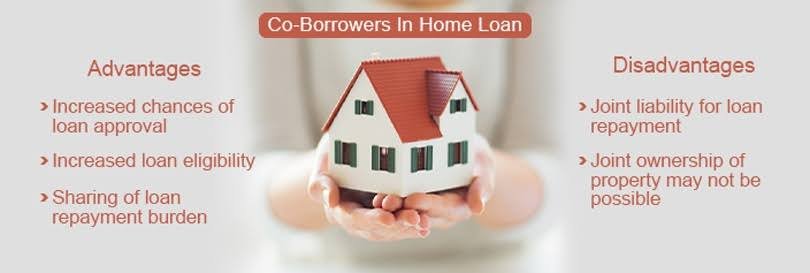
- Higher approval odds: Two incomes and two credit files can make a riskier profile more bankable, especially when one borrower’s credit or income alone isn’t sufficient.
- Potentially larger loan amounts: Lenders may approve higher principal because combined income supports a greater payment capacity.
- Potentially better terms: With a stronger combined profile, it may be possible to secure a lower APR, longer term options, or fewer fees.
- Shared payment burden: When intentionally planned, two incomes can make the monthly payment more manageable.

Risks and Drawbacks
- 100% joint liability: If one borrower can’t or doesn’t pay, the other must cover the full payment. Late or missed payments impact both credit files.
- Credit score exposure: Hard inquiries affect both applicants initially; ongoing utilization and payment behavior will influence both scores over the life of the loan.
- Relationship risk: Disagreements over how funds are used or how to split payments can strain personal or business relationships.
- Harder unwinding: Removing a co-borrower later typically requires refinancing into a new loan in just one person’s name, which depends on that person’s standalone qualifications at the time.

Eligibility and Underwriting Considerations
- Credit score thresholds: Lenders often price to the lower of the two scores. If one borrower has very poor credit, it can neutralize the advantage of a stronger co-borrower.
- Debt-to-income (DTI): Lenders weigh total monthly debt obligations vs. combined gross income. If one borrower carries high debt, it can reduce the maximum approved amount.
- Income stability and documentation: Expect to provide pay stubs, bank statements, tax returns (for self-employed), and ID for both applicants. Employment continuity and consistent deposits help underwriting.
- Residency and identification: Both applicants must meet the lender’s KYC/AML, residency, and age requirements. For cross-border pairs, options can be limited; local lenders and credit unions may be more flexible.

Costs, Rates, and Terms
- APR: Driven by credit profiles, market rates, loan amount, and term length. Co-borrowing can lower APR if the joint profile is stronger than either alone.
- Fees: Watch for origination fees (often 0%–10% of the loan amount), late fees, and possible prepayment penalties. Some lenders offer rate discounts for autopay or loyalty.
- Term length: Typical personal loan terms range from 12–84 months. Longer terms reduce monthly payment but increase total interest paid.

When Co-borrowing Makes Sense
- Both parties will benefit from the funds: Joint home improvement, moving costs, shared medical or education-related expenses, or business startup capital.
- One applicant is marginal alone, but the pair is strong: Co-borrowing improves approval odds and pricing.
- Clear agreement on repayment: There’s trust and a plan for how to split payments and handle disruptions.
When to Consider Alternatives
- Only one party benefits: Consider a cosigner instead of a co-borrower if the second party won’t use the funds but is willing to help with approval.
- Large collateral-backed needs: For home-related financing, secured options (e.g., home equity) may offer lower APRs, though they introduce collateral risk.
- Small, short-term needs: A 0% intro APR credit card (if eligible) may be cheaper for expenses that can be repaid quickly.
- Credit rebuilding priority: If the weaker borrower aims to build independent credit, explore secured loans or credit-builder products instead of joint obligations.
Practical Steps to Do It Right
- Define the purpose and split
- Agree in writing on how funds will be used, who has custody of disbursement, and how monthly payments will be divided.
- Decide a primary payment method (e.g., a shared account) with automatic transfers.
- Align on credit and income transparency
- Review each person’s credit reports (Equifax, Experian, TransUnion) and scores together.
- List all debts, monthly minimums, and net income. Address any red flags (collections, high utilization) before applying.
- Shop broadly and prequalify
- Use soft-credit prequalification where available to compare APRs, terms, and fees without impacting scores.
- Check banks, credit unions, and reputable online lenders; credit unions can be competitive, especially for members.
- Optimize application inputs
- Add autopay to qualify for any rate discounts.
- Choose the shortest term that keeps payments affordable to minimize total interest.
- Document sharing and controls
- Establish a dedicated joint account for repayments to avoid missed payments.
- Set up alerts for due dates and low balances; both parties should have visibility.
- Create a contingency plan
- Decide what happens if one person loses income: who covers the gap, and for how long.
- Consider a written side agreement outlining repayment shares, recourse, and dispute resolution.
- Protect the relationship
- Keep a monthly check-in to review balances, upcoming expenses, and any changes in income.
- If the relationship changes, evaluate refinancing sooner rather than later.
Common Questions
- Can a co-borrower be removed later? Typically only through refinancing into a new loan in one person’s name, subject to that person qualifying alone.
- Do both get credit for on-time payments? Yes. Positive payment history generally benefits both credit files; likewise, late payments harm both.
- Is a co-borrower the same as a co-applicant? In personal loans, the terms are often used interchangeably. Both indicate joint applicants who share rights and responsibilities.
- What if one applicant has much stronger credit? Some lenders price to the lower score; others consider blended risk. If pricing doesn’t improve with the weaker applicant, consider a cosigner or a solo application by the stronger borrower.

Tips Specific to Brazil-Based Applicants
- Compare banks and fintechs: In Brazil, fintech personal lenders (empréstimo pessoal) and digital banks can offer quick decisions; check CET (Custo Efetivo Total) and IOF impacts.
- Payroll-deducted loans: If eligible, consignado loans tied to payroll/pension often provide lower rates and can be available to public employees, private-sector workers at partner firms, or INSS beneficiaries.
- Contract clarity: Review clauses on co-responsibility, default processes, and early settlement discounts (liquidação antecipada). Confirm both parties’ rights to the funds and the process to alter terms.
- Data protection: Ensure both applicants are comfortable with data sharing under LGPD and the lender’s privacy practices.
Bottom Line
A co-borrower personal loan can be a powerful tool to increase approval odds, unlock better terms, and share repayment, but it binds both parties to full legal responsibility. It works best when both benefit from the funds, maintain transparency about finances, and establish clear repayment processes and contingency plans. If only one person benefits—or if the relationship risk outweighs the rate benefit—consider a cosigner or alternative financing.